Glittering Gold, Hidden Costs: The Human Struggle Behind Tanzania’s Mining Renaissance
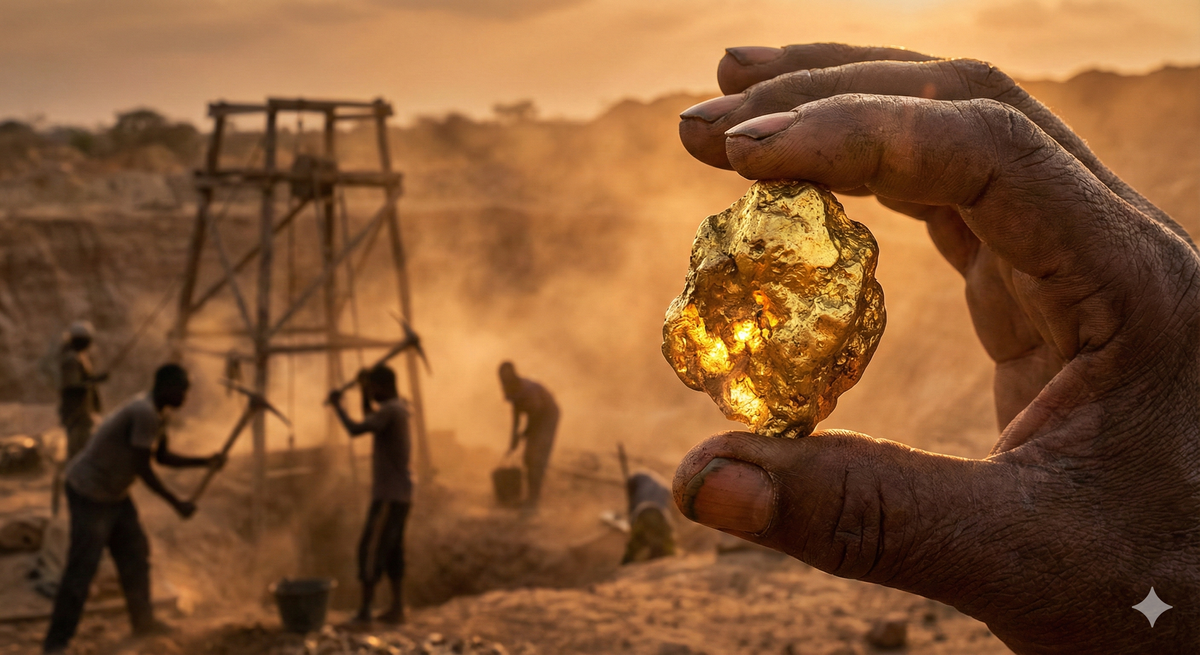
Tanzania is in the midst of a mining renaissance. If you look at the macro-economic figures, the story is one of unbridled success. Gold exports are booming, the government has built a literal wall around its Tanzanite wealth to stop smuggling, and the contribution of mining to the national GDP is steadily climbing toward the 10% target set for 2025.
But zoom in from the national statistics to the dusty, sunbaked pits of Chunya, Geita, and Mererani, and a different picture emerges. Here, over 1.5 million artisanal and small-scale miners (ASM)—the backbone of this "renaissance"—grapple with a reality defined not by profit margins, but by survival. While the government celebrates record revenues, the people digging the earth are paying a steep price in health, safety, and dignity.
As we look toward the future of Tanzania's extractive sector, we must confront the uncomfortable truth: the cost of our glittering minerals is often paid in human suffering. Here are the four critical challenges threatening the sustainability of this vital sector.
1. The Silent Epidemic: Dust and Disease
Deep inside the gemstone shafts of Mererani and the gold pits of Geita, a silent killer is at work. It isn't a collapsing tunnel or a chemical spill—it is dust.
For decades, small-scale miners have drilled into dry rock with little to no respiratory protection. The resulting fine silica dust settles in the lungs, causing silicosis—an incurable, progressive disease that suffocates its victims over time. Recent studies have revealed a shocking reality: in the Tanzanite mines of Mererani, the prevalence of silicosis among miners is estimated at nearly 30%.
This is a public health crisis in the making. Unlike a mine accident that kills instantly and makes headlines, silicosis kills slowly, often years after a miner has left the pit. The tragedy is that it is entirely preventable. "Wet drilling" technology, which suppresses dust with water, exists but is rarely used due to water scarcity and the higher cost of equipment. Until the government and stakeholders mandate and subsidize safety gear, Tanzania’s miners are effectively trading their breath for gemstones.
2. The Mercury Trap
If dust is the enemy in the air, mercury is the enemy in the water. In the goldfields of Chunya and the Lake Victoria zone, mercury remains the poor man’s processing tool of choice. It is cheap, easy to use, and incredibly effective at binding to gold. It is also a potent neurotoxin.
Despite Tanzania being a signatory to the Minamata Convention, mercury use is rampant. Miners mix mercury with ore bare-handed and burn the amalgam in open air to vaporize the mercury, inhaling toxic fumes. This mercury doesn't just disappear; it settles into the soil and waterways. Research in Chunya has found mercury levels in local rivers exceeding World Health Organization guidelines by ten times.
The government, through the State Mining Corporation (STAMICO), is pushing for a transition to Carbon-in-Pulp (CIP) and Vat Leaching technologies, which are cleaner and recover more gold. However, these industrial-grade plants require capital that most subsistence miners simply do not have. For the mother washing ore by the riverbank to feed her children today, the long-term threat of mercury poisoning is a distant fear compared to the immediate threat of hunger.
3. The Gender Gap: Women on the Periphery
Women are the invisible engine of the artisanal mining sector. They make up nearly 30% of the workforce, yet they remain systematically excluded from the wealth they help create.
Walk onto a typical mine site, and you will see women. But you won't often see them owning the lucrative Primary Mining Licenses (PMLs) or managing the shafts. Instead, they are relegated to the periphery: crushing rocks manually, washing tailings (waste) for scraps of gold, or cooking for male miners.
The barriers are structural and cultural. Banks view women as "high risk" borrowers, denying them the capital to buy equipment. Worse, deep-seated cultural taboos persist—such as the belief in some areas that a menstruating woman brings bad luck to a mine—which are used to justify banning women from high-value underground work.
Reports of sexual exploitation are also alarmingly common. In the desperate "rush" economy of mining towns, women are sometimes coerced into trading sex for access to mineral-rich waste piles or jobs, a phenomenon known as "sex for gold". While organizations like the Tanzania Women in Mining and Mineral Industry (TWiMMI) are fighting back, the sector remains a boys' club where women pay a higher price for entry.
4. Stolen Childhoods
Perhaps the most heartbreaking challenge is the presence of children in the mines. In the rush for gold, education often becomes a casualty.
Poverty drives thousands of children into the mines of Geita and Shinyanga. Instead of being in school, these children—some as young as eight—are hauling heavy sacks of rocks, crushing ore, or handling toxic mercury. The International Labor Organization (ILO) has flagged mining as one of the "worst forms of child labor" due to the extreme physical hazards and moral dangers involved.
The issue is cyclical. When a gold rush hits a district, school dropout rates spike as children leave classrooms to chase quick money or help their parents survive. These children grow up with no skills other than digging, trapping them in the same poverty cycle as their parents. While the government has laws against child labor, enforcement in the remote, scrubby bush where these mines operate is notoriously difficult.
5. David vs. Goliath: The ASM-LSM Conflict
Finally, there is the simmering tension over land. Tanzania’s geology does not distinguish between a multinational corporation and a village digger, but the law does.
Historically, the best mineral deposits were carved up and leased to Large-Scale Mining (LSM) companies like Barrick Gold and AngloGold Ashanti. This displacement of local miners has fueled decades of conflict. The North Mara Gold Mine, for instance, has been a flashpoint for violence, where local "intruders"—often former land owners—clash with mine security and police while trying to scavenge rocks from the industrial waste dumps. These confrontations have led to injuries, lawsuits, and deaths, casting a long shadow over the sector's reputation.
However, there is hope. A "coexistence model" is emerging in places like Geita, where large mines are beginning to collaborate with small-scale miners by ceding land and providing technical training. This shift from conflict to cooperation is essential. The future cannot be "Large Scale vs. Small Scale"; it must be an integrated ecosystem where both can thrive.
Conclusion: Humanizing the Renaissance
Tanzania’s mining sector has transformed. The mineral markets are open, the revenues are flowing, and the geology is more promising than ever. But a renaissance that leaves its workers choking on dust, poisoned by mercury, or trapped in poverty is incomplete.
The next phase of reform must move beyond fiscal formalization—taxing the product—to human formalization. This means enforcing wet drilling to stop silicosis, subsidizing clean technology to end the mercury era, and actively dismantling the barriers that keep women and children vulnerable.
The gold is there. The tanzanite is there. The challenge now is to ensure that the wealth under the ground improves the lives of the people walking on top of it.


